Showing posts with label rusyn. Show all posts

Wednesday, July 29, 2020

Crowdsourcing Rusyn places in the US

Rusyns may not be a well-known ethnic group, but we have quite a presence if you know where to look. This is especially evident in the Northeastern US, where many onion-domed churches were founded by Rusyn immigrants in the late 1800s or early 1900s.

I always look for Rusyn sites when I'm traveling, and have seen quite a few Facebook posts asking for Rusyn points of interest in Northeastern Pennsylvania (NEPA), for example. After a quick poll to gauge interest and participation, I started a collaborative Google Map that we could use to map Rusyn places in the US. In under a week, we already had an impressive collection of points on the map!


Data in this map is organized into several layers:
  • Rusyn Places in the US - This is the layer most people will view and/or edit. 
    • Blue points indicate a Rusyn place of interest
    • Brown points indicate a Rusyn-style wooden church (more on that later)
  • Former Rusyn Places in the US - This layer contains places that have a Rusyn history and have been repurposed, closed, or demolished.  
    • Gray points indicate a place that is no longer used by Rusyns, but still has significance (architectural, cornerstone, etc.)
    • Black points indicate a place that no longer has any Rusyn significance or has been demolished. These points still provide context for the extent of a former Rusyn community 
  • Needs More Info - This layer includes places that are too vague to be useful or may be Rusyn but aren't confirmed (by sources or colloquial knowledge). 
    • Red points were identified either during my review of newly added points or in my own research, and require additional digging. 
  • Rusyn Places in Canada - This layer includes two Rusyn-style wooden churches in Canada because they were too interesting to leave off the map, and are very close to the Northeastern US.
  • Russian Brotherhood Organization Lodges (-1959) - This layer includes towns that had a RBO lodge before 1959, as listed on the Rusyns of PA blog. This layer provides places for me to investigate for additional Rusyn communities and places that I may not have found otherwise.
    • Green points are placed on the town, as these lodges often didn't have addresses of their own and met in churches or other businesses.

Findings

Not surprisingly, churches and cemeteries are most of the mark we've left on the US over the past 136 years*. I did find some fun things though:
Of course, Rusyns need their pirogi, so I included a number of Eastern European restaurants in Rusyn areas, along with the famously Rusyn Baba's Pirogies in Brooklyn, and a future Rusyn restaurant in Johnstown, PA.

Take one look at the map and you'll notice that most of the Rusyn places in PA are in NEPA or near Pittsburgh. There are a significant amount of Rusyn places in NJ and OH as well. I also learned more about a number of Rusyn outposts in less likely places, like Hartshorne, OK and Brookside, AL. Rusyns migrated from the Northeastern US to Hartshorne and Brookside for job opportunities in the mines.

The most exciting find though, is a number of Rusyn-style wooden churches in the US and Ontario, Canada! Who knew?!? Here's the list, so far:

Rusyn-style wooden churches in the US and Canada

If you know of any that I missed, please comment below!

Idea for a Road Trip

I'm still stuck at home, trying to stay safe during a global pandemic. I'm not sure when I'll get to do this road trip, but I can dream... I used MapQuest's route planner again and came up with this route. I can visit all of the Rusyn-style wooden churches in the Northeast in 26 hours of driving!


I excluded the two in Ontario, Canada, since Canada is not letting Americans (or any other foreign nationals) in during the pandemic**. I also excluded the church in Georgia, because it is so far from the rest of the churches. I'll have to save that for another trip.

Sources

I cited my sources in each point on the map. If there's no comment in the map point, it was a suggestion by someone in the Facebook group, or was added by a user. For further reading, check out these links:

* St Michael's in Shenandoah was the first Rusyn church in the US. It was built in 1884 and demolished in 2015. The congregation still exists, and has a newer church building that they've used for many years.
** I don't blame them. The US has some work to do, as infection numbers are skyrocketing again.

Saturday, April 18, 2020

Interpreting History of Rusyn Villages based on Church Schematismus Data

Have I mentioned how much I love Archive.org lately? It's so good! There's so much incredible information for those willing to sift through it. I don't remember how, but I found a number of Schematismus books for the Diocese of Munkacs, Hungary. The Diocese of Munkacs is now known as the Greek Catholic Eparchy of Mukachevo, and is in today's Ukraine. It used to include parts of eastern Slovakia, but today only includes Zakarpattia Oblast, Ukraine. These books detail information on each of the Greek Catholic churches, the village, etc.


Research Subjects

Both of my Rusyn ancestors attended churches in that diocese, in the late 1800s and early 1900s. I thought it would be interesting to see what I could learn about their villages from these church records.The villages are 50km apart (approximately 30 miles):
  • Kalna Roztoka, Slovakia - Current population: 615 [1]
  • Lyuta, Ukraine - Current population: 2412 [2]

Data Collection

In total, I found 32 books on Archive.org, ranging from 1814 to 1915. On average, there were 3 years between each book. I set up a spreadsheet to collect data for each village, including the following:
  • Year
  • Link
  • Village Name
  • Page #
  • Priest's Name
  • Administrator's Name
  • Cantor's Name
  • Church Name
  • # of People 
  • # of People in Other Branches
  • Total # of People
  • Church Name (Other Branch)
  • # of School Children
  • Other Notes
  • District
This is the majority of what can be found in the books. A comprehensive look would want to translate the descriptions and capture additional data, such as whether the village had a train station or post office. Amenities like these were identified with a symbol.

Results

I found it interesting to learn the names of the priests in each village. The priest in Kalna Roztoka in 1915 was Basilius Lyachovics. I have a 1933 letter from him to my great-grandmother, providing the birth and death dates for my great-great-grandparents, and asking her to send money to help care for her sister. In a separate post, I might look into the average length of time priests stayed at these two villages.

One of the most interesting, quantifiable changes over this 100 year period is the population of each village. This chart highlights the largest changes. The image below has the population colorized on a scale of red-yellow-green, where red is lowest and green is highest.


This raises the question: what happened circa 1856, that Kalna Roztoka lost 50% of their village population, and Lyuta lost 17%, in the prior 9 years. Or in 1836 when Kalna Roztoka lost 28% of their village population, and Lyuta lost 25%, in just 1 year.

Here's another view of the population changes:

Data on European Epidemics, Famines, and Weather

I'm writing this blog post while under a Stay At Home order for the COVID-19 pandemic, but I started work on this post in Fall 2019, before the virus was on anyone's radar. At that time I found it interesting how much information there is on historical climate-related disasters, pandemics, and famines. Now I have a different perspective, as we are living through a modern-day pandemic. The situation is eerie.

While I was unable to find any documentation of specific disasters, famines, or epidemics in either Kalna Roztoka or Lyuta, I did find some related information.

Lyuta is on the other side of the mountain crest from Austrian Galicia. It seems logical that a famine in Galicia could indicate difficult times on the other side of the mountains as well. The Wikipedia article on Famines in Austrian Galicia [3, 4] notes famines in 1832, 1853-1855.

The Wikipedia List of Epidemics [5] shows a global epidemic from 1855-1860: the 3rd (Bubonic) plague pandemic.

I looked into potential climate-related disasters, but had a hard time finding specific data. This website has some interesting climate observations: https://www.tambora.org/index.php/grouping/event/list?g%5Bqt%5D=&t%5Byb%5D=1800&t%5Bye%5D=1954&s%5Bcn%5D=9934&sort=t.begin&mode=search&page=14 If anyone has climate data for the 1800s, let me know!

Sources

  1. Kalna Roztoka Wikipedia Article: https://en.wikipedia.org/wiki/Kaln%C3%A1_Roztoka
  2. Lyuta Wikipedia Article: https://en.wikipedia.org/wiki/Liuta
  3. Famines in Austrian Galicia: https://en.wikipedia.org/wiki/Famines_in_Austrian_Galicia#Chronological_occurrences
  4. Excerpt from "Oil Empire" by Alison Fleig Frank mentioning Galician famines: https://books.google.com/books?id=jNaFc1OdN-QC&pg=PA45#v=onepage&q&f=false
  5. List of epidemics: https://en.wikipedia.org/wiki/List_of_epidemics

Tuesday, December 17, 2013

Rusyn Christmas Tree

The Comfort Suites in Bethlehem PA has an exhibit of Christmas trees decorated to represent ethnic groups who have settled in and influenced the city.  After hearing that there was a Rusyn tree on display, I decided that a visit was in order.

Given Rusyns' history of being absorbed into larger ethnic and/or political groups, I somewhat was nervous that it would be a Ukrainian or Slovak or even Russian (gasp!) tree, with a mention of "oh yeah, some of these people identify as Rusyns".  I was thrilled to find an entire tree dedicated to Carpatho-Rusyn culture!

Me + Rusyn Christmas tree.  I look even shorter than usual!  
That's what you get when a tall person takes your photo!

The tree had a variety of ornaments on it, ranging from cookies to pysanky to religious icons to golden walnuts.  It was beautiful!

Cookies & pysanky

Icons, candles, gold-painted walnuts, a cool bird, and the Rusyn flag

Carpatho-Rusyn American!

Another pysanka

Straw angel!

Description of Rusyn Christmas traditions

If you're anywhere near Bethlehem, you should definitely check out this display.  There are trees representing a variety of ethnic groups, not just Eastern Europeans.  While you're in town you can visit Christkindlemarkt at Steel Stacks (former Bethlehem Steel).

Outside of Christkindlemarkt

Here's a bonus photo of another tree that really impressed me:

The Lithuanian tree was beautiful, with most ornaments made of straw.

Thursday, May 20, 2010

A Brief Comparison of Eastern European Languages

My genealogical research involved the Rusyn people in Eastern Europe. While they have their own language, so does everybody else in that neighborhood! This means that looking at old maps and church documents becomes a crash course in learning a few key words in multiple languages. You quickly begin to see how place names evolved over time, depending on the ruling country of the day. I was curious to compare several of the languages that exist in Rusyn areas. Since place names aren't exactly universal, it makes comparing languages pretty sticky. Since churches are quite vital to genealogical research [they held the records!], I decided to compare the word "church".

Disclaimer time! I don't speak these languages... so Google Translate is my source. So all credit/blame goes to them. :)

Here is a comparison of "church" in Rusyn to "church" in a variety of other languages from nearby countries. Transliteration of words in Cyrillic are in parentheses after each word.
Rusyn
цирков (cyrkov)
Bulgarian
църква (tsŭrkva)
Croatian
crkva
Czech
kostel
Estonian
kirik
Finnish
kirkko
Galician
igrexa
Hungarian
templom
Latvian
baznīca
Lithuanian
bažnyčia
Norwegian
kirke
Polish
kościół
Romanian
biserică
Russian
церковь (tserkov')
Serbian
црква (crkva)
Slovak
kostol
Slovenian
cerkev
Swedish
kyrka
Ukrainian
церква (tserkva)

I was very surprised to see how different the Czech and Slovak words are from Rusyn, especially when considering their proximity to the Rusyn area [Rusyns live in Slovakia and Ukraine] and the fact that a lot of Rusyn words are very similar to their counterparts in Czech/Slovak. No surprise here: the Rusyn word is very similar to Russian and Ukrainian.

I ended up including the Baltic States because of how similar some of their words are to the Romanian word for church. Unexpected!

As always, Hungary is an outlier. :-P

I'm sure you're wondering why I included Galician, as it clearly has nothing to do with anything I'm talking about. I included it simply to point out that the Galician language in Google Translate refers to Galicia in Spain, not Galicia the historic area in Eastern Europe.

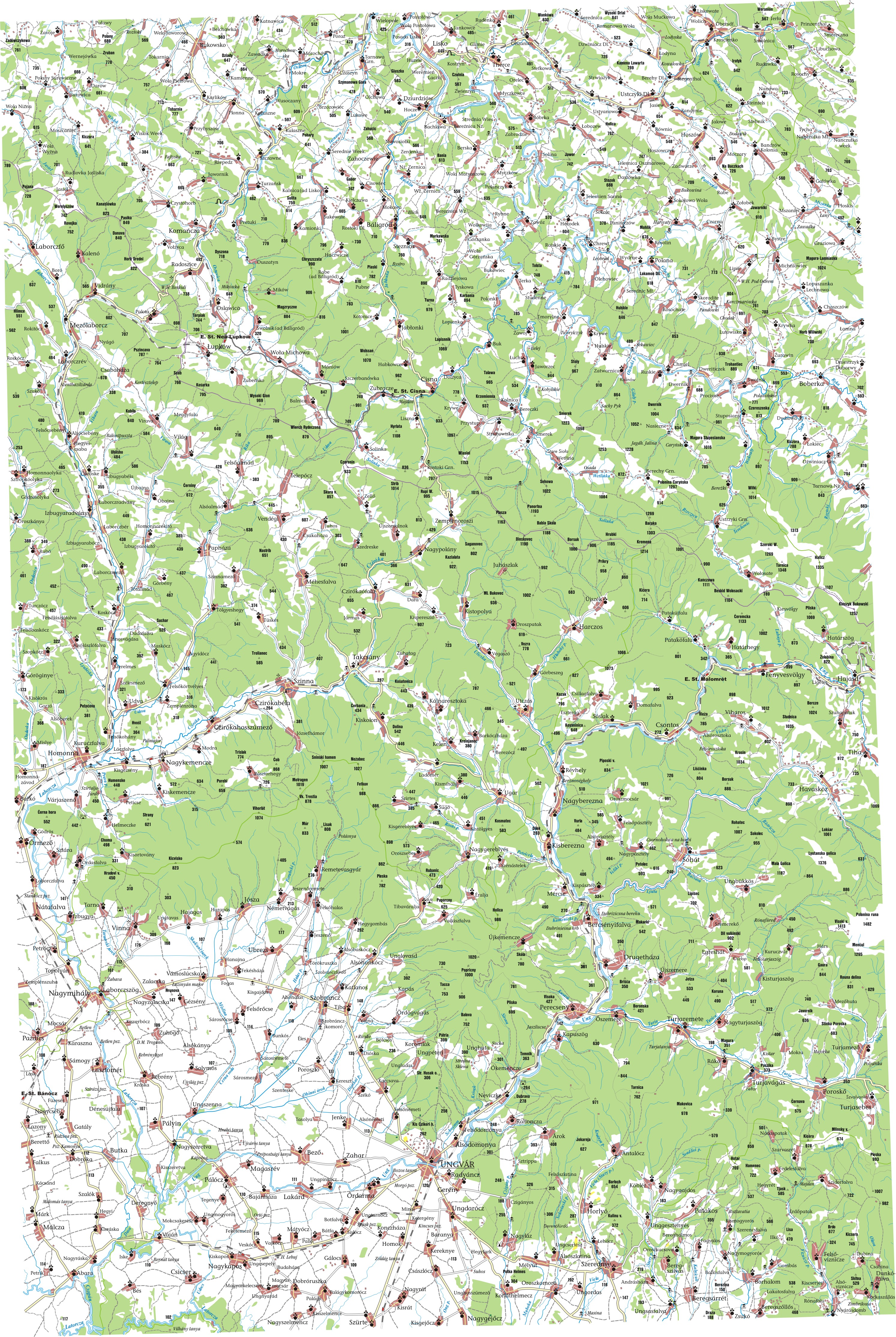
To help visualize these variations, I threw together a map:

Fascinating, no?!

Wednesday, February 17, 2010

Google Maps and Ukraine

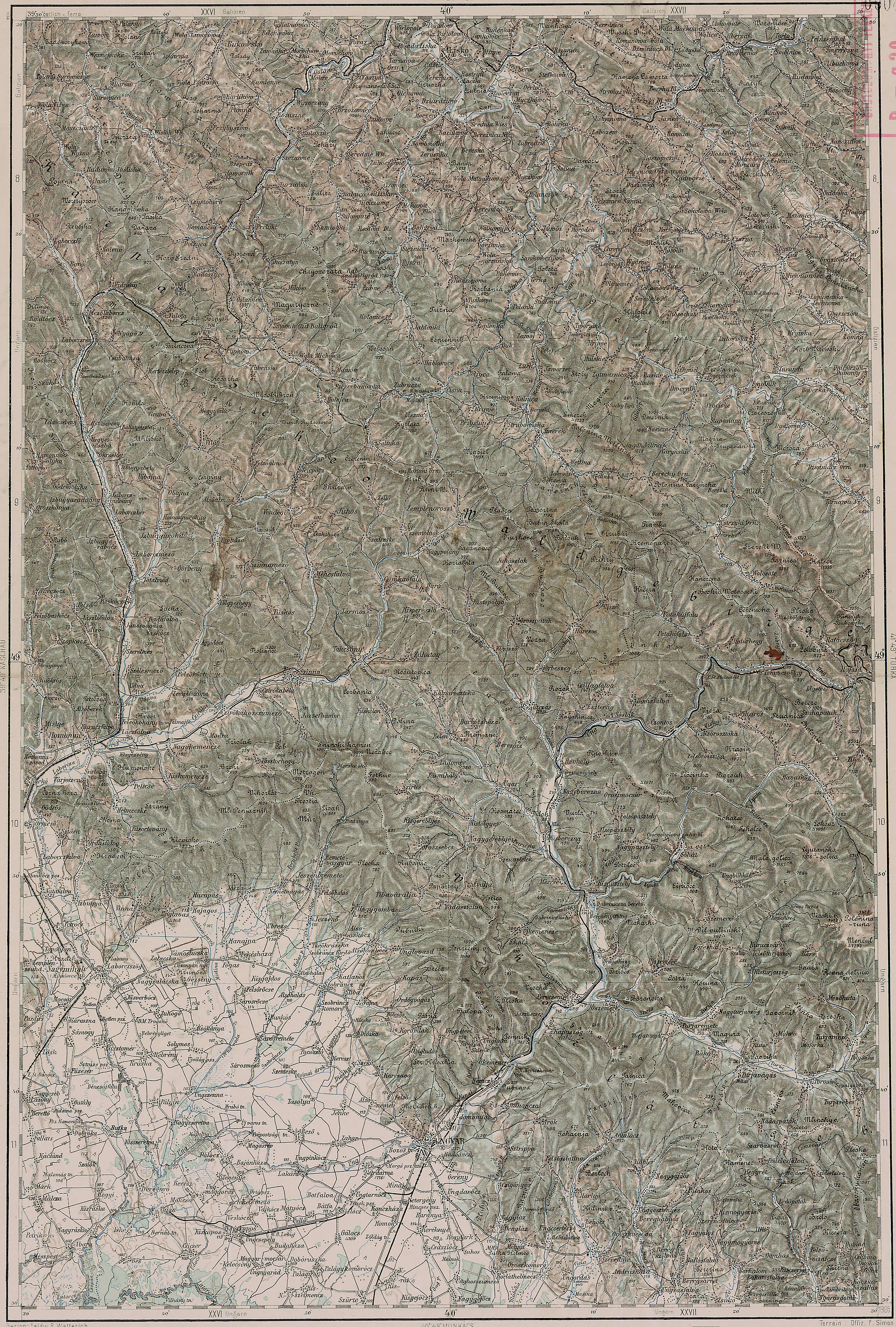
About five years ago I started researching my family's genealogy, and I found myself searching for information on remote villages in Eastern Europe. There was a lot of information to be found on villages in the Slovak Republic, Poland, Slovenia, etc, but Ukraine remained mysterious. There was virtually no Ukraine data in Google Maps, and Yahoo! Maps provided only major roads and cities. After the easy route turned out to be a dead end, I began looking at historic maps from the Austro-Hungarian Empire. Some of these maps provided great information about the geography of the area I was researching, and some had been redrawn to provide a better look at populated places.


Five years later, it looks like Google is finally adding Ukraine data!  Take a look at Uzhgorod, the capital of Zakarpats'ka Oblast! Such detail!


View Larger Map


I noticed today that hi-res satellite imagery is inching up on Ljuta, which was a village of particular interest to me.


View Larger Map


For some extra eyestrain, try to find Ljuta on the maps I linked to in the first paragraph [or anywhere else in the Austro-Hungarian Empire]! In Hungarian, Ljuta is called Havasköz.

Thursday, February 7, 2008

Transliteration (Pertaining to Eastern Europe)

I'm sure most of you won't find this the least bit interesting, but... I do! And it's not like the fact that I'm a nerd is a news flash or something.

Over the past year and a half I've done a lot of genealogical research. This has led me to many documents in many languages! These languages include: Russian, Rusyn, Ukrainian, Hungarian, Slovak, German, Slovene, Polish, and Lithuanian. I don't know anything about German, Slovene, Polish or Lithuanian yet... that's for later. Anyway, most of my research has focused on my dad's family. That part of my family comes from the Rusyn areas in western Slovakia and eastern Ukraine. If you're not looking at Rusyn names... this won't be nearly as helpful, but most of these are fairly constant.

Enough background info, here's a breakdown of a few things that I find fairly common in surnames!


*The H is mostly silent in names that begin with Hr. Stick with silent and you're likely to be closer to how it's supposed to sound!
**In most Slavic languages, Г is transliterated to a G. However, in Rusyn (where names that begin with Hr are common) Г is an H, whereas Ґ is a G.
***This isn't a single letter, it's two. Therefore, no IPA pronunciation.


So, if you know me, you know my last name. If you don't... it has a silent H and a bunch of other stuff non-Eastern Bloc people don't like to pronounce. I'm hoping that this might help people understand how to pronounce fun names like mine! :-P