Hungary has been in the news a lot lately, but that's not why I'm blogging about it. I recently came across a blog which asked about subdivisions of Hungary. I'm not sure if this will answer those questions, but I hope it helps... As a disclaimer, most of what I know about Hungary is from the era of the Austrian-Hungarian Empire... so I'm modernizing a bit here :-P
Anyhoo, Hungary has 19 counties and the capital (Budapest), and is divided into seven regions, as seen on the map below. I included the Danube and Tisza rivers, as they were the dividers on the original map in question.
Ok, you caught me. I was looking for an excuse to make maps of central Europe. :)
Data source: DIVA-GIS
Showing posts with label Austro-Hungarian Empire. Show all posts
Friday, October 15, 2010
Thursday, May 20, 2010
A Brief Comparison of Eastern European Languages
My genealogical research involved the Rusyn people in Eastern Europe. While they have their own language, so does everybody else in that neighborhood! This means that looking at old maps and church documents becomes a crash course in learning a few key words in multiple languages. You quickly begin to see how place names evolved over time, depending on the ruling country of the day. I was curious to compare several of the languages that exist in Rusyn areas. Since place names aren't exactly universal, it makes comparing languages pretty sticky. Since churches are quite vital to genealogical research [they held the records!], I decided to compare the word "church".
Disclaimer time! I don't speak these languages... so Google Translate is my source. So all credit/blame goes to them. :)
Here is a comparison of "church" in Rusyn to "church" in a variety of other languages from nearby countries. Transliteration of words in Cyrillic are in parentheses after each word.
I was very surprised to see how different the Czech and Slovak words are from Rusyn, especially when considering their proximity to the Rusyn area [Rusyns live in Slovakia and Ukraine] and the fact that a lot of Rusyn words are very similar to their counterparts in Czech/Slovak. No surprise here: the Rusyn word is very similar to Russian and Ukrainian.
I ended up including the Baltic States because of how similar some of their words are to the Romanian word for church. Unexpected!
As always, Hungary is an outlier. :-P
I'm sure you're wondering why I included Galician, as it clearly has nothing to do with anything I'm talking about. I included it simply to point out that the Galician language in Google Translate refers to Galicia in Spain, not Galicia the historic area in Eastern Europe.
To help visualize these variations, I threw together a map:

Fascinating, no?!
Disclaimer time! I don't speak these languages... so Google Translate is my source. So all credit/blame goes to them. :)
Here is a comparison of "church" in Rusyn to "church" in a variety of other languages from nearby countries. Transliteration of words in Cyrillic are in parentheses after each word.
Rusyn
цирков (cyrkov) Bulgarian
църква (tsŭrkva) Croatian
crkva Czech
kostel Estonian
kirik Finnish
kirkko Galician
igrexa Hungarian
templom Latvian
baznīca Lithuanian
bažnyčia Norwegian
kirke Polish
kościół Romanian
biserică Russian
церковь (tserkov') Serbian
црква (crkva) Slovak
kostol Slovenian
cerkev Swedish
kyrka Ukrainian
церква (tserkva)
I was very surprised to see how different the Czech and Slovak words are from Rusyn, especially when considering their proximity to the Rusyn area [Rusyns live in Slovakia and Ukraine] and the fact that a lot of Rusyn words are very similar to their counterparts in Czech/Slovak. No surprise here: the Rusyn word is very similar to Russian and Ukrainian.
I ended up including the Baltic States because of how similar some of their words are to the Romanian word for church. Unexpected!
As always, Hungary is an outlier. :-P
I'm sure you're wondering why I included Galician, as it clearly has nothing to do with anything I'm talking about. I included it simply to point out that the Galician language in Google Translate refers to Galicia in Spain, not Galicia the historic area in Eastern Europe.
To help visualize these variations, I threw together a map:

Fascinating, no?!
Tags:
Austro-Hungarian Empire,
geneaology,
language,
maps,
Russian,
rusyn,
Slovene,
Slovenian,
transliteration,
Ukraine
Wednesday, February 17, 2010
Google Maps and Ukraine
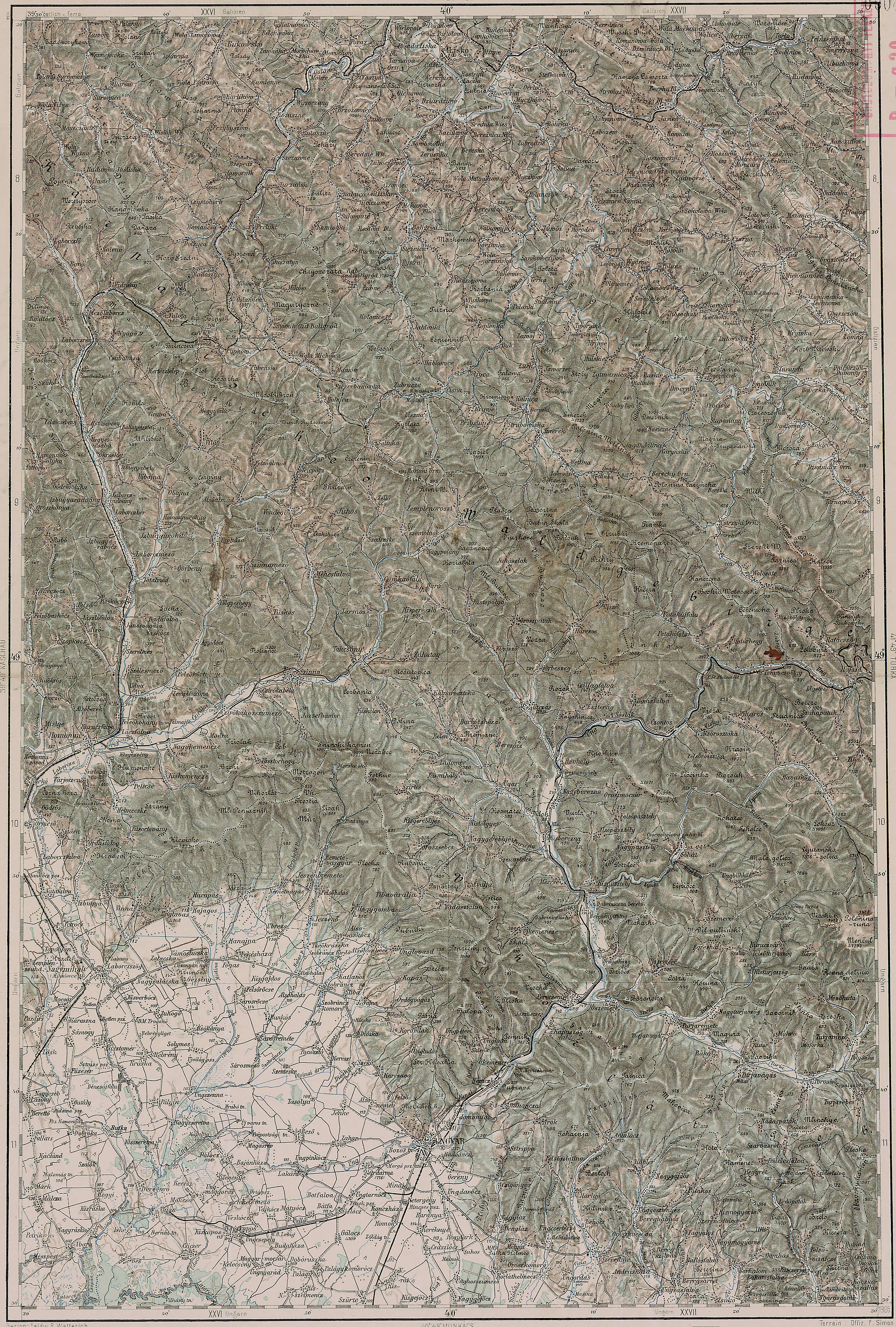
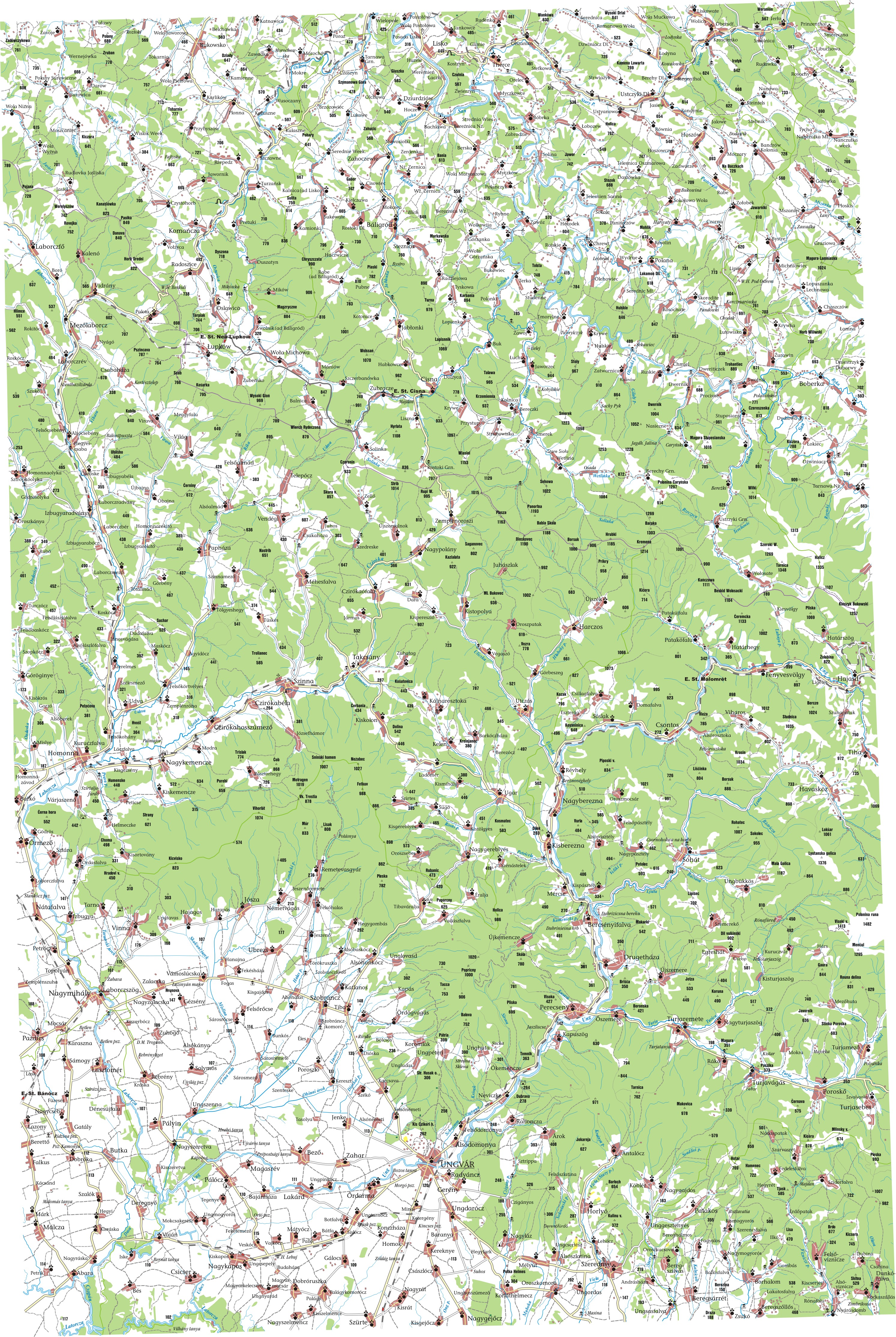
About five years ago I started researching my family's genealogy, and I found myself searching for information on remote villages in Eastern Europe. There was a lot of information to be found on villages in the Slovak Republic, Poland, Slovenia, etc, but Ukraine remained mysterious. There was virtually no Ukraine data in Google Maps, and Yahoo! Maps provided only major roads and cities. After the easy route turned out to be a dead end, I began looking at historic maps from the Austro-Hungarian Empire. Some of these maps provided great information about the geography of the area I was researching, and some had been redrawn to provide a better look at populated places.
Five years later, it looks like Google is finally adding Ukraine data! Take a look at Uzhgorod, the capital of Zakarpats'ka Oblast! Such detail!
View Larger Map
I noticed today that hi-res satellite imagery is inching up on Ljuta, which was a village of particular interest to me.
View Larger Map
For some extra eyestrain, try to find Ljuta on the maps I linked to in the first paragraph [or anywhere else in the Austro-Hungarian Empire]! In Hungarian, Ljuta is called Havasköz.
Five years later, it looks like Google is finally adding Ukraine data! Take a look at Uzhgorod, the capital of Zakarpats'ka Oblast! Such detail!
View Larger Map
I noticed today that hi-res satellite imagery is inching up on Ljuta, which was a village of particular interest to me.
View Larger Map
For some extra eyestrain, try to find Ljuta on the maps I linked to in the first paragraph [or anywhere else in the Austro-Hungarian Empire]! In Hungarian, Ljuta is called Havasköz.
Tags:
Austro-Hungarian Empire,
geneaology,
Google Maps,
Ljuta,
maps,
rusyn,
Ukraine
Subscribe to:
Posts (Atom)